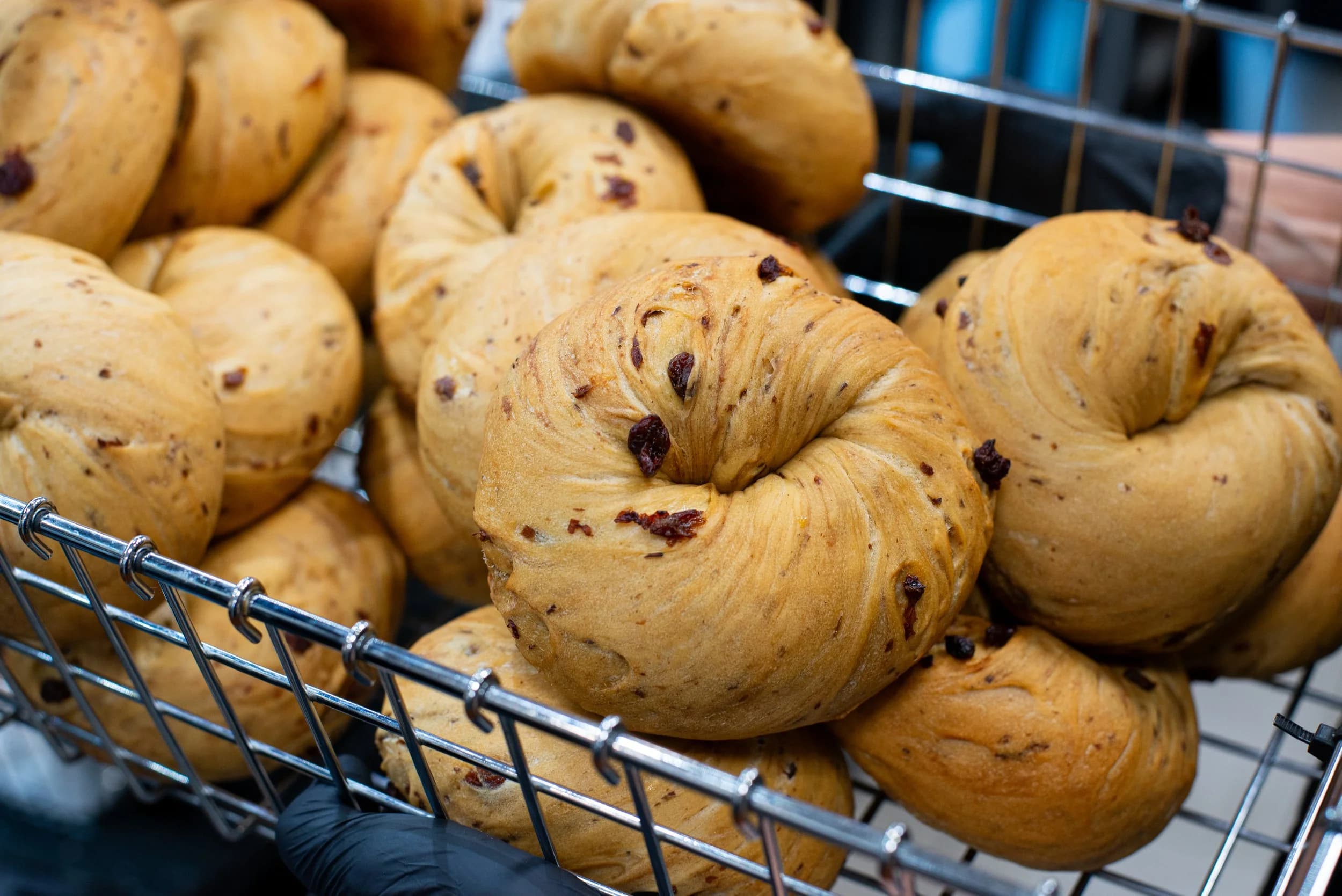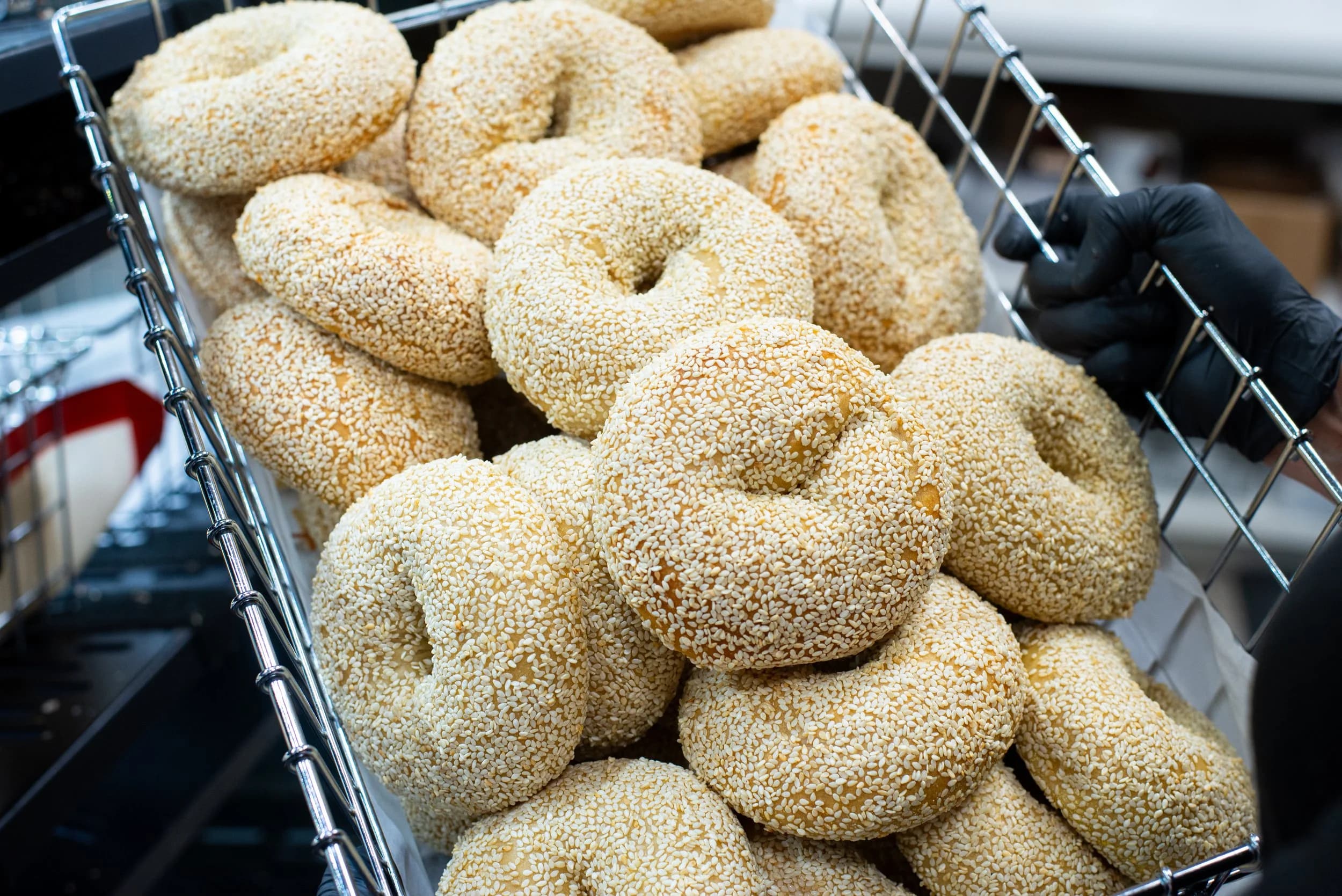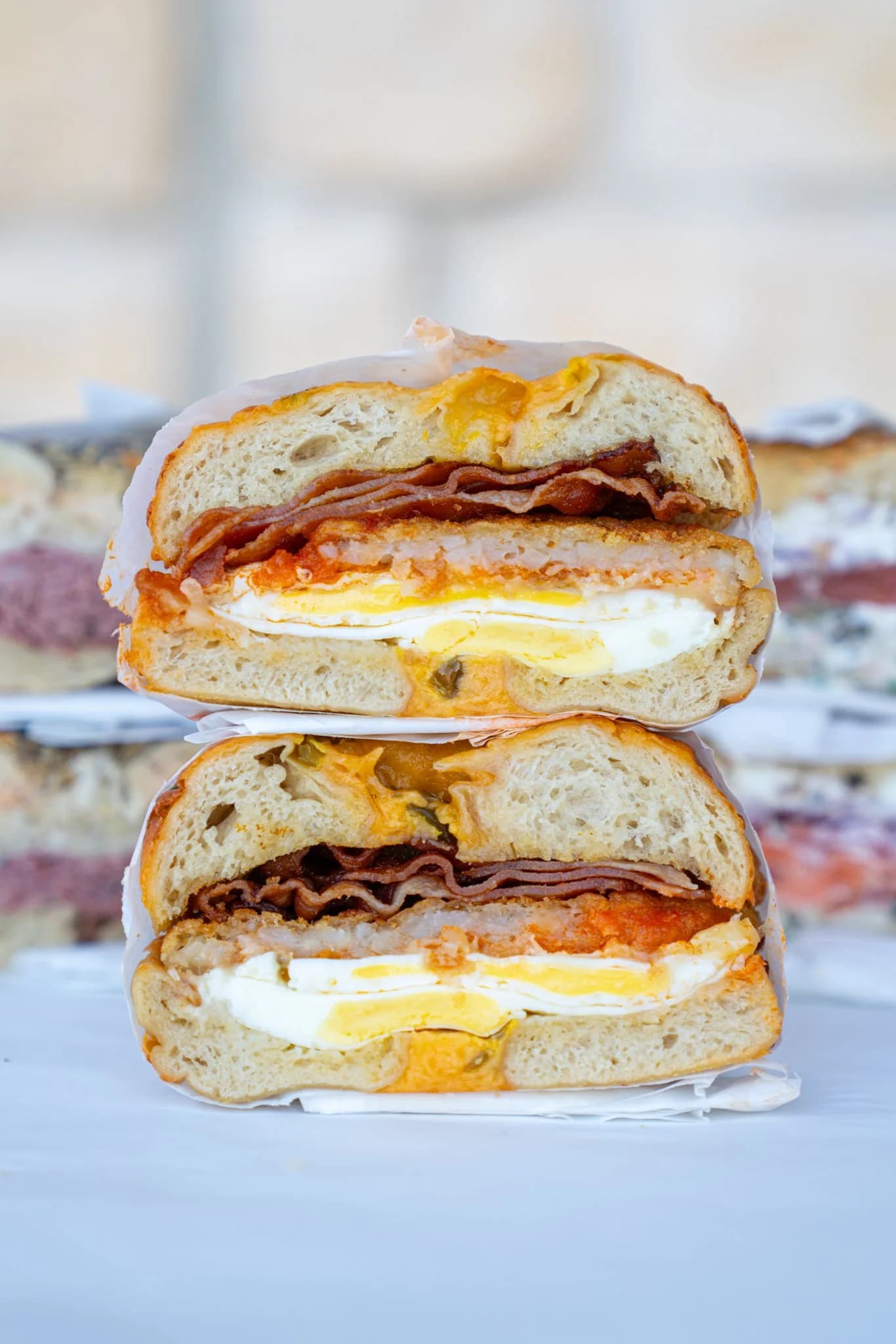
I need to say something that might sound controversial, but every real baker knows it's true: most of what America calls a bagel is not a bagel. It's bread with a hole in the middle. And the difference isn't subtle — it's the difference between a steak and a hamburger patty. They're both beef, but one of them was made with intention and the other was made with efficiency.
I've spent years studying the craft of bagel making — the history, the technique, the science. And the more I learn, the more I'm convinced that the gap between a real bagel and a mass-produced impostor is one of the widest in all of food. So let me break down what actually makes a bagel a bagel, and why so few places get it right.
The Mass-Produced Problem
Walk into any chain bagel shop or grocery store bakery and pick up one of their bagels. Squeeze it. If it compresses like a sponge, it's not a real bagel. A real bagel resists. It has heft. It has density. The interior should be tight-crumbed and chewy, not airy and soft.
The reason most commercial bagels fail this basic test is that they skip the step that defines the product. They don't boil them. Boiling is the single most important step in bagel making — it's what separates a bagel from every other bread product on earth — and most large-scale producers have eliminated it because it's slow, labor-intensive, and doesn't scale well in a factory.
Instead, they use steam injection ovens. The result looks vaguely similar from the outside, but the texture is completely different. Without the boil, there's no starch gelatinization on the surface, no barrier to restrict oven spring, no foundation for a proper crust. You end up with a soft, fluffy, bread-like product that happens to be shaped like a ring. It toasts fine. It holds cream cheese. But it's not a bagel.
The Boil: Why It Matters
When raw bagel dough is dropped into boiling water — ideally sweetened with malt barley syrup — the surface starches undergo gelatinization. They absorb water, swell, and form a thin, tight skin. This skin is the key to everything that follows.
In the oven, that gelatinized surface acts as a casing. It constrains the dough's expansion, which is why real bagels are dense and chewy rather than light and airy. It also develops into the crust — that thin, slightly glossy, faintly crackling exterior that shatters when you tear into it. The malt sugars on the surface caramelize during baking, contributing color, flavor, and that subtle shine.
Every bagel we make at Dan's is hand-boiled in malt-sweetened water. Every single one. There is no other way.
The Flour: High-Gluten, Non-Negotiable
Bagels require high-gluten bread flour — typically 13–14% protein content. Standard all-purpose flour (10–12% protein) produces a bagel that's too soft, too tender, too bread-like. The extra protein creates a stronger, more elastic gluten network that gives bagels their signature chew.
When you bite into a properly made bagel, the interior should pull slightly. It should have resistance. You should feel the gluten strands stretching as you tear it apart. That's high-gluten flour doing its job, developed through proper mixing and long fermentation.
We source our flour from a mill that specializes in high-protein bread flour. It costs more than standard flour. It's harder to work with — high-gluten dough requires more mixing energy and more careful hydration management. But the texture it produces is irreplaceable.
Dan's Sourdough Twist on Tradition
Traditional New York bagels use commercial yeast. They're mixed, proofed, boiled, and baked in a single day — sometimes in as little as three to four hours. They're excellent when done right. But at Dan's, we take a different path.
We use a sourdough starter instead of commercial yeast. This choice adds complexity at every level. The wild yeast in our starter leavens more slowly than commercial yeast, which means longer fermentation — our 48-hour process. But that extended fermentation is where the magic lives. The lactic acid bacteria in the starter produce organic acids that contribute flavors no commercial yeast can replicate: a subtle tanginess, a depth, a complexity that lingers on the palate.
Some purists would say a sourdough bagel isn't a "real" New York bagel, and in a strict historical sense, they're right. Traditional bagel shops on the Lower East Side didn't use sourdough. But I'd argue that our approach honors the spirit of the tradition even as it extends it. The original bagel makers were craftsmen who cared deeply about doing things right. They would have understood the impulse to push the craft forward. Innovation in service of quality — that's not betrayal. That's respect.
The Test
Here's how I tell my team to evaluate a bagel — ours or anyone else's. Hold it in your hand. It should feel heavier than it looks. Squeeze it. It should resist, then spring back slowly. Tear it open. The interior should be tight, slightly glossy, with visible strand structure. Now bite. The crust should crackle faintly under your teeth. The interior should be chewy and dense, pulling slightly as you tear away a piece. And the flavor should make you stop mid-bite.
“If the bagel doesn't have a crust that crackles, an interior that pulls, and a flavor that makes you stop mid-bite — it's just bread with a hole.”
That's the standard. It's not a complicated standard, but meeting it requires specific choices at every step: high-gluten flour, long fermentation, a proper kettle-boil, a screaming-hot oven, and a refusal to cut corners for the sake of speed or scale.
Why the Difference Matters
You might wonder why any of this matters. It's just bread, right? But I'd push back on that. The things we eat shape our days. A great bagel at 7 AM sets a tone. It says: someone cared about this. Someone invested time and skill and attention into making this exactly right. In a world where so much of our food is optimized for cost and speed, a product made with genuine craft is a small act of resistance. It's a reminder that better is possible, and that the difference between good enough and genuinely good is worth the extra effort.
That's what drives us at Dan's Bagels. Not nostalgia, not tradition for tradition's sake, but a genuine conviction that the real thing — made right, made carefully, made with respect for the craft — is worth making. And it's worth eating.
Explore our full menu to taste the difference real craft makes.
View Our Bagels