Every food has a history. But the bagel’s story is one of the most remarkable in all of baking — a 400-year journey through immigration, labor unions, cultural identity, corporate consolidation, and a modern renaissance that I’m proud to be part of. If you’ve ever torn into a warm, just-boiled bagel and wondered how this particular shape, this particular texture, this particular experience came to exist, pull up a chair. This is the complete history of the bagel.
The Origins: 17th-Century Poland
The bagel’s story begins in the Jewish communities of Poland in the early 1600s. The first written record appears in the community regulations of Kraków in 1610, where bagels are mentioned as gifts given to women after childbirth. The word itself likely comes from the Yiddish “beygl,” derived from the Middle High German “böugel,” meaning bracelet or ring. From the beginning, bagels were associated with completeness, continuity, and the cyclical nature of life — a circle with no beginning and no end.
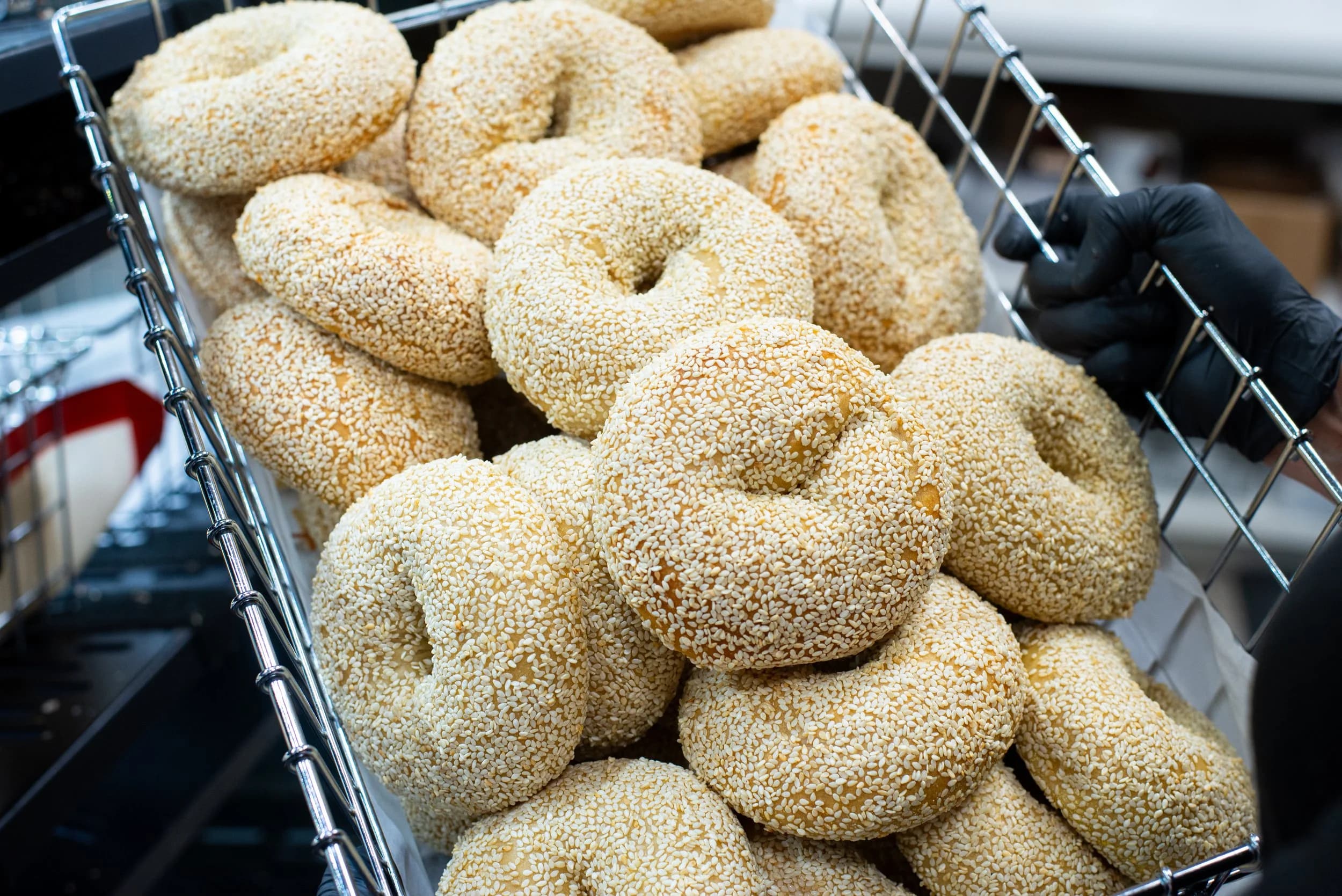
Polish bagels were simple: high-gluten wheat flour, water, yeast, a touch of malt, and salt. The dough was shaped by hand, boiled in water, and baked in wood-fired ovens. The technique was remarkably similar to what we do today, four centuries later. That continuity is extraordinary. Almost nothing else in the food world has survived this long with its fundamental process intact.
By the 1700s, bagels had become a staple of the Ashkenazi Jewish diet across Eastern Europe. They were sold by street vendors, strung on long dowels or strings, and carried through the markets of Warsaw, Kraków, Vilna, and beyond. They were portable, durable, affordable, and deeply satisfying — the perfect food for working people.
The Immigrant Journey: From Poland to the Lower East Side
The great wave of Eastern European Jewish immigration to America between 1880 and 1920 brought the bagel to New York City. Alongside millions of immigrants came their recipes, their techniques, and their food traditions. The bagel was among the most important of these transplants.
On the Lower East Side of Manhattan, Jewish bakers set up shop in basement bakeries, working through the night in cramped, sweltering conditions. The work was brutal: mixing heavy dough by hand, shaping hundreds of bagels per hour, boiling them in huge kettles, and baking them in coal-fired ovens. But the product they produced was extraordinary. Those Lower East Side bagels — dense, chewy, malt-kissed, with a crust that crackled under your teeth — became the gold standard. They defined what a bagel was supposed to be.
The bagel was more than food. For immigrants, it was a connection to the old country, a taste of home in a new and often hostile land. For their American-born children, it was a bridge between two worlds — something their parents made, something their neighbors coveted, something uniquely theirs.
The Union Era: Bagel Bakers Local 338
In 1907, the Bagel Bakers Local 338 was founded in New York City. It became one of the most powerful and exclusive trade unions in the food industry. Membership was limited to roughly 300 bakers, and the union controlled virtually every bagel bakery in metropolitan New York. To become a union bagel baker, you had to be sponsored by a current member — typically a family member. Fathers taught sons. Uncles taught nephews. The craft was passed down through generations, protected and preserved.
The union maintained strict standards. Every bagel was hand-rolled. Every bagel was kettle-boiled. Every bagel was baked in a proper oven. There were no shortcuts, no substitutions, no compromises. The union also controlled production quantities, keeping supply tight and prices stable. At its peak, Local 338 produced nearly all the bagels consumed in New York City — and those bagels were, by virtually all accounts, magnificent.
This era — roughly the 1920s through the 1960s — was the golden age of the bagel. The product was pure. The craft was respected. The bakers were skilled artisans who took enormous pride in their work. When people talk about the “real” New York bagel, this is the era they’re romanticizing, and with good reason.
The Golden Age: H&H, Ess-a-Bagel, and the NYC Icons
By the mid-20th century, the bagel had transcended its immigrant origins to become a New York City icon. Shops like H&H Bagels (founded in 1972 on the Upper West Side), Ess-a-Bagel (opened in 1976 on the East Side), Russ & Daughters (a Lower East Side institution since 1914), and Murray’s Bagels in the Village became destinations. People waited in lines that stretched down the block. Tourists added bagel shops to their New York itineraries alongside the Statue of Liberty and Central Park.
These shops upheld the old standards. They hand-rolled. They kettle-boiled. They used malt barley syrup. They baked in hot ovens. The bagels they produced had heft, chew, crust, and flavor. They were, and remain, benchmarks of the craft. H&H at its peak was producing 80,000 bagels a day — all by hand, all boiled, all magnificent. When you talk to anyone who grew up in New York in the ’70s and ’80s, they can describe their neighborhood bagel shop with the kind of detail usually reserved for first loves.
The Chain-ification: How Corporate America Changed the Bagel
Then came the chains. In the 1990s, companies like Einstein Bros. Bagels, Panera Bread, and Bruegger’s began expanding nationally. They brought “bagels” to markets that had never had them before — places like Texas, Arizona, Florida, and the Midwest. For many Americans, these chains were their first introduction to the product.
But what the chains served wasn’t really a bagel. To scale production, they eliminated the boil and replaced it with steam injection. They used commercial yeast for speed. They softened the dough to appeal to American preferences for fluffy bread. They added sugar, oil, and preservatives. The result was a bread ring — soft, puffy, easily torn, with no crust and no chew. It looked like a bagel. It was shaped like a bagel. But it lacked everything that made a bagel a bagel.
The chain-ification had a devastating side effect: it lowered the bar. An entire generation grew up thinking that a soft, airy, bread-like product was a bagel. When they encountered a real one — dense, chewy, crackling — some of them didn’t even recognize it. The chains didn’t just sell an inferior product. They erased the cultural memory of what the product was supposed to be.
The Artisan Renaissance: Coming Full Circle
But food has a way of correcting itself. Starting around 2010, a new generation of bakers began pushing back. Inspired by the sourdough bread movement, the farm-to-table ethos, and a genuine respect for traditional technique, artisan bagel shops began opening across the country. Black Seed Bagels in New York blended Montreal and New York traditions. Wise Sons in San Francisco brought real bagels to the West Coast. Uprising Bagels in Denver, Call Your Mother in D.C., Poppy’s in Chicago — a wave of passionate, craft-focused bakers emerged, all committed to doing it right.
These bakers understood what the chains had forgotten: that the process IS the product. You cannot shortcut your way to a great bagel. The boil matters. The fermentation matters. The flour matters. The shaping matters. Every step is load-bearing.
Dan’s Bagels: East Coast Tradition, Texas Heart
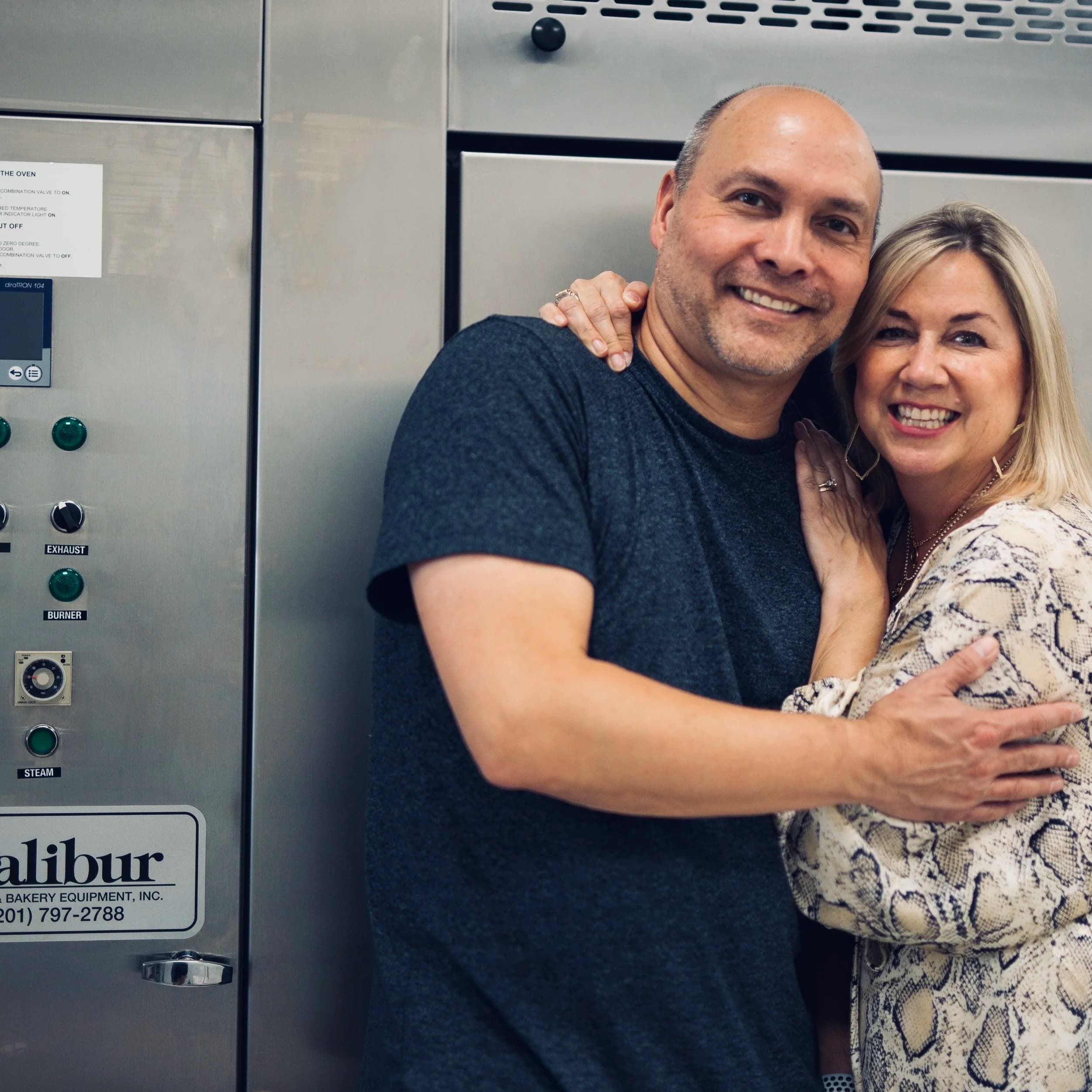
This is where our story fits in. When Jen and I moved from the East Coast to Texas, we brought our standards with us. We’d grown up with real bagels — the kind that could ruin your day if you ate them fresh and then had to go back to a chain version. In DFW, we found plenty of bread rings but no real bagels. So we started making them ourselves.
Dan’s Bagels is the next chapter in a 400-year story. We honor the tradition — the hand-shaping, the kettle-boil, the high-gluten flour, the malt barley syrup — while pushing the craft forward with our 48-hour sourdough fermentation. The Polish bakers of the 1600s would recognize our technique. The union men of Local 338 would approve of our standards. And the East Coast transplants who walk into our shops and take their first bite — they close their eyes and they’re home.
“The bagel has survived 400 years because the process is too good to abandon. Every generation that tries to shortcut it produces an inferior product. Every generation that honors it produces something extraordinary.”
That’s the history of the bagel. And we’re honored to be writing its next page, right here in Texas.
Learn about the science behind our 48-hour sourdough fermentation process.
Read: The Science of Sourdough